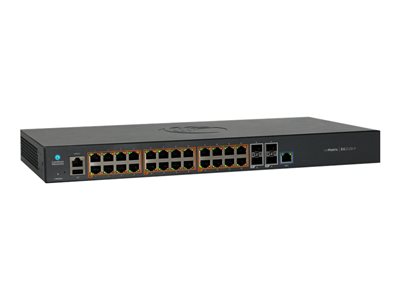
Protocole de gestion à distance | | SNMP 1, SNMP 2, Telnet, SNMP 3, HTTP, HTTPS, TFTP, CLI, ICMP 6, SSH, SSH-2, RMON 1, RMON 2, RMON 3, SFTP, RMON 9
|
Caractéristiques | | Auto-uplink (MDI/MDI-X auto), IGMP snooping, mise en miroir des ports, prise en charge DiffServ, contrôle de la tempête de Broadcast, Multicast Storm Control, Unicast Storm Control, prise en charge du protocole SNTP, PVST, DHCP snooping, QoS, bouton de réinitialisation, prise en charge LLDP, relais DHCP, PVRST, client DHCP, isolation des ports, proxy IGMP, 2 ventilateurs, Link Aggregation, Root Guard, PVE, LLDP-MED, départ rapide IGMP, DoS protection, BPDU Filter, serveur Telnet, client Telnet, BPDU Guard, prise en charge de BOOTP, QinQ VLAN, ABP, mesure du trafic, MAB, WRR, SP, Prise en charge Auto-MDI/MDIX, contrôle du flux, DSCP based CoS, DSCP basé sur ToS, Inter-VLAN Routing, serveur DHCP, Static Link Aggregation, Storm Control, LACP, prise en charge du réseau local (LAN) virtuel, régulation de trafic, SPQ, File d'attente WRR, limite de vitesse, Traffic Control, authentification 802.1x, journal de système, MIB II, IF MIB
|
Normes de conformité | | IEEE 802.3, IEEE 802.3u, IEEE 802.1D, IEEE 802.1Q, IEEE 802.1p, IEEE 802.3af, IEEE 802.3x, IEEE 802.3ad (LACP), IEEE 802.1w, IEEE 802.1x, IEEE 802.3ac, IEEE 802.1s, IEEE 802.3at, IEEE 802.1ab (LLDP), IEEE 802.3ab
|
 01 43 00 43 08 (lundi au jeudi 8H30 18H30, vendredi 8H30 17H30) Contactez-nous